
Starting from version 11, Smart Report Maker allows you to create powerful report chains by linking multiple reports together. This lets users explore data step by step instead of viewing everything in a single flat report.
For example, a user can start with a Customer List, click a specific customer to see only their invoices, click an invoice to view its products, and finally drill into the supplier of each product. Each step is automatic and context-aware.
Instead of overloading one report with too much information, you can create a logical chain of reports connected through parameters.
Users can navigate from summaries to detailed data with a single click instead of applying filters manually. And even when these linked reports are embedded in another website or application, the drill-down behavior continues to work seamlessly.
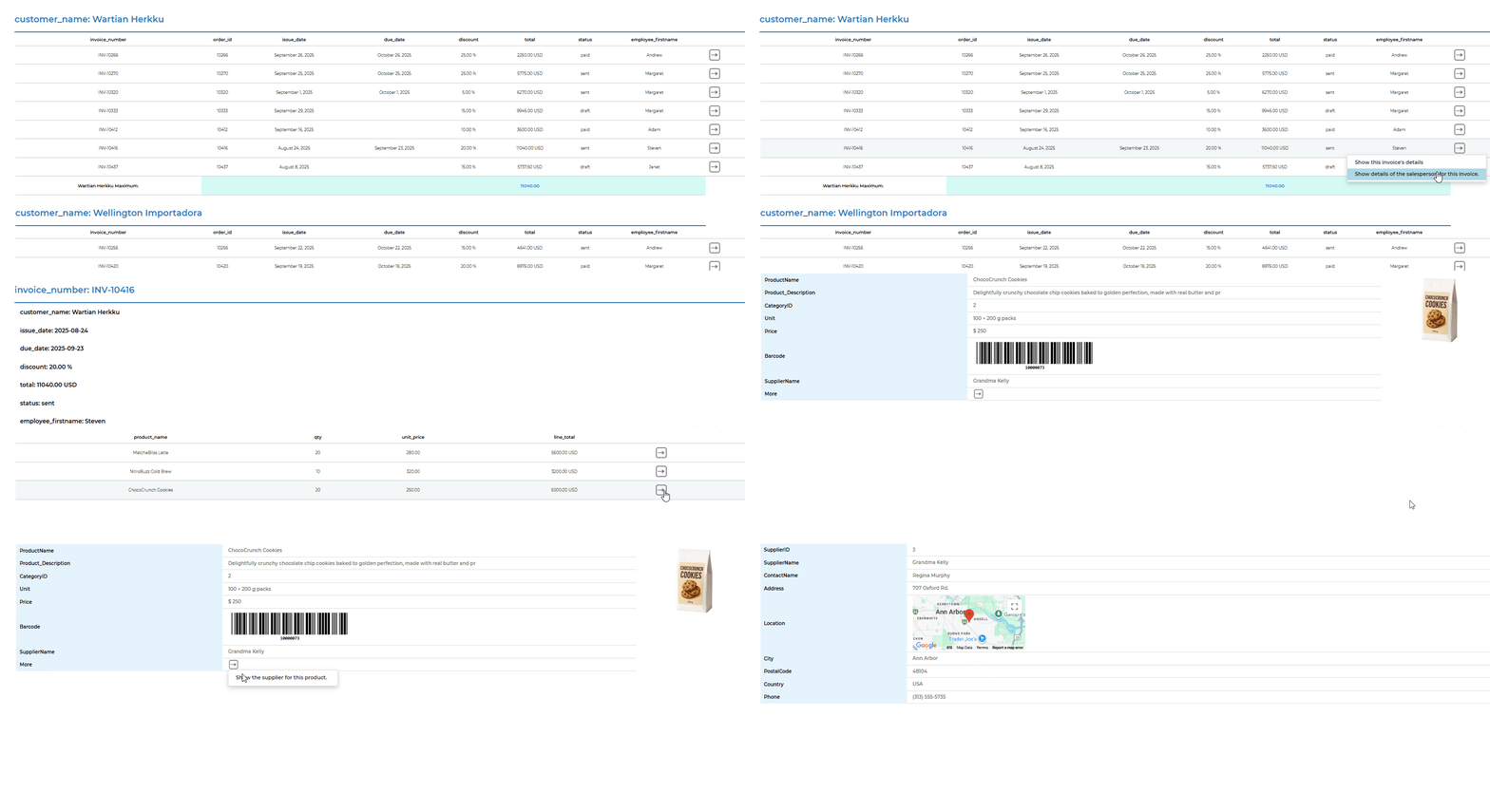
Linked reports built with Smart Report Maker
The following examples showcase how the linking feature works. Each report chain was built in Smart Report Maker and then embedded into a WordPress demo page.
Users can start at “Invoices Per Customer” and navigate through:
This report chain lets users move from:
Category list
→ Products in that category
→ Supplier of each product
A linked report can receive parameters either from a parent report or directly through the URL, and it uses those parameters to filter its data accordingly. For example, a product-linked report might rely on a “product_id” parameter passed via the URL or from the parent report so that it displays only the records related to that specific product.
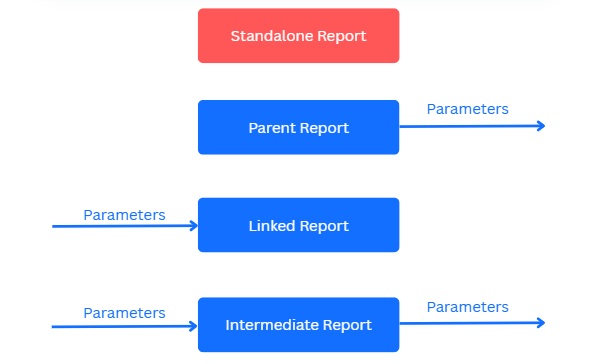
Sends parameters to another report when a value is clicked.
While creating a Parent Report, there is a Parameter Mapping page where you:
Used in multi-level report chains.
It receives a parameter from one report and passes another parameter to the next report in the chain.
This type works independently and cannot be linked to or from any report.
Always follow this sequence:
Linked Report → Intermediate Report (if needed) → Parent Report
Why start with the Linked Report?
Because the parent and intermediate reports need to map their parameters to fields that already exist in the linked report. Defining it first ensures the chain works correctly.
Both linked and intermediate reports include an If Empty setting that controls what happens when no parameter is passed:
Options:
Choosing the right behavior ensures the report doesn’t break or reveal unintended data.
A: Report linking allows you to connect multiple reports so users can navigate data step by step by clicking values in a report. A report chain is a sequence of linked reports where each report passes context (parameters) to the next, enabling guided drill-down from summaries to detailed records.
A: Yes. You can link a single Customers Report to multiple related reports. For example, the customer report can be linked to an Accounts Report to view each customer’s balance, and also to an Invoices Report to display all invoices for that customer. From there, users can drill down further into invoice details or any other relevant reports you choose.
A: Report chains keep reports clear and focused. Instead of overloading one report with many joins and filters, you guide users through data logically, improving readability, performance, and overall user experience.
A: A Parent Report sends parameters when users click a value, while a Linked Report receives those parameters and filters its data accordingly. The Parent controls navigation, and the Linked Report displays the related details.
A: An Intermediate Report is useful in multi-level report chains. It receives a parameter from one report and passes another parameter to the next report, allowing you to build complex drill-down paths across several reports.
A: Yes, Linked reports can receive parameters directly through the URL, which makes them ideal for embedding reports in websites, dashboards, or external applications while still filtering data correctly.
A: You control this behavior using the If Empty option. You can choose to show all records or apply a default value, ensuring the report behaves safely and predictably.
A: Yes, Drill-down navigation continues to work even when reports are embedded in platforms like WordPress or custom applications, without requiring users to manually reapply filters.
A: The recommended order is:
Linked Report → Intermediate Report (if needed) → Parent Report
This ensures required parameters already exist and can be mapped correctly.
For a detailed video tutorial on implementing linked reports, please check this tutorial
A: Yes. Report linking is especially useful for large datasets because it breaks data into logical steps, improves performance, and helps users focus only on the data relevant to their current selection.